Welcome from our Chair
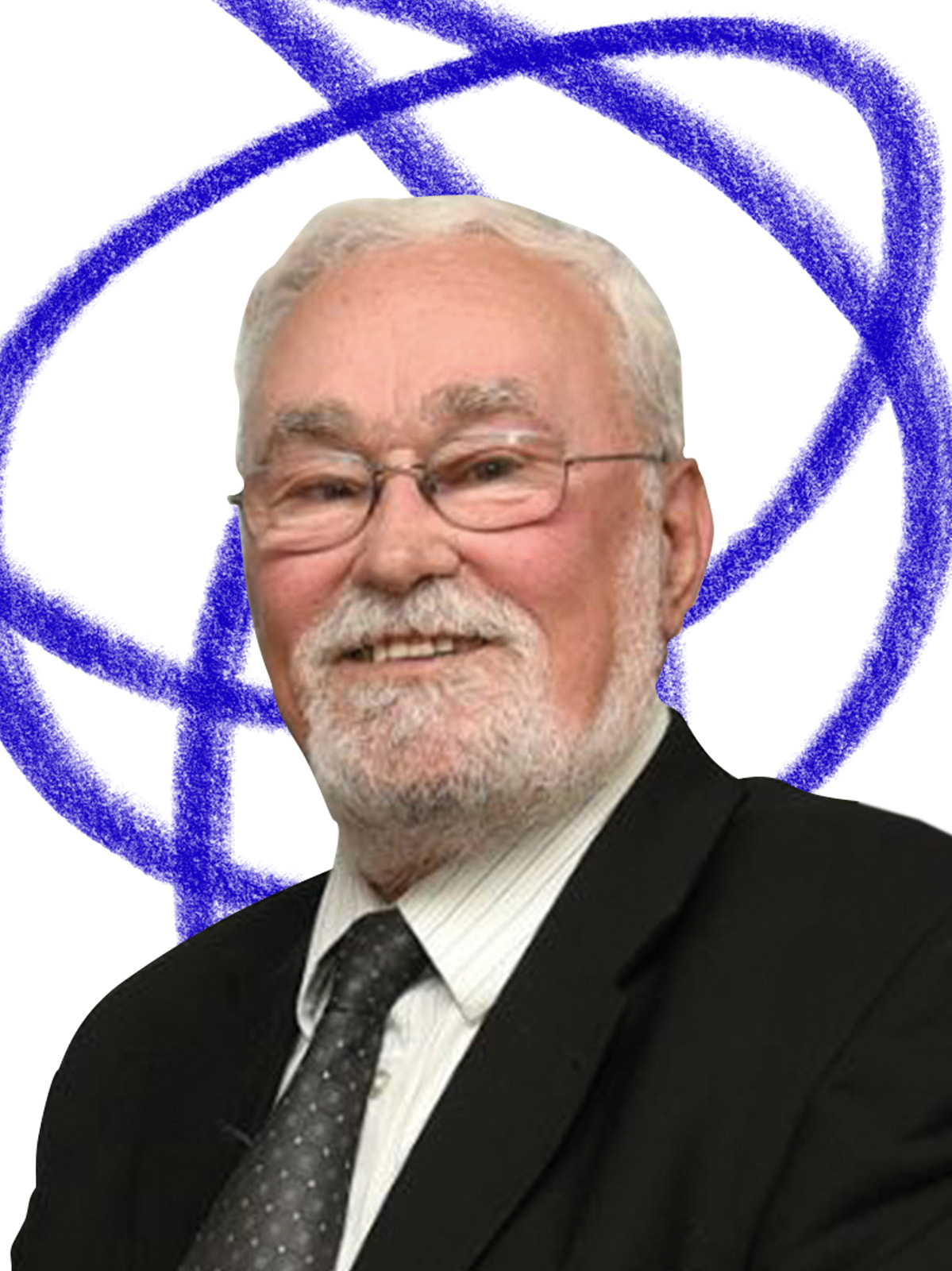
Reverend Canon Frank Longbottom
It is a great privilege to be able to thank all of you who work to help others, and all you who give us your trust to help you. I do this on behalf of the Birmingham Mind family, of which I am proud to be a member. This year we have cared for more people than ever before, and we continue to grow as needs change. We are developing a new Recovery House on our Sycamore Lodge site in Erdington, which will be ready to open next year. It will provide 12 individual flats for people as a much needed alternative to needing to go into hospital.
We also provide drop-in services in the Bullring and many other places; these are part of our Wellbeing focus. They offer untold support to many people who are experiencing very challenging times.
All this, and much more, we do whilst maintaining the high standards and values, which are recognized across the City, some of these pieces of work will be showcased in this report. We can only achieve these aims because we plan very carefully and allocate resources where they are needed most. Above all, our success and reputation is achieved by all of you who care about “Better Mental health for All”.
Jump to a section
If you’ve never heard of a Mental Health Hospital Discharge Navigator before, their role is simple in theory but powerful in impact: remove the barriers that prevent someone from leaving hospital safely and with dignity. From arranging benefits to securing suitable accommodation, Discharge Navigators provide the practical, emotional, and holistic support that often makes the difference between relapse and recovery.
We recently sat down with Debbie, who has worked as a Discharge Navigator for over 3.5 years on inpatient wards with Birmingham and Solihull Mental Health NHS Foundation Trust. With warmth and deep empathy, she shares what her role entails and why it matters so much.

Seeing the change in someone is what I love the most.
I work across three hospital wards, two wards at the Zinnia Centre (a male and female ward) and a female ward at Newbridge House. Patients come in at their most vulnerable, and often with little trust in anyone. Supporting them to rebuild that trust and seeing their transformation and recovery, is what I love the most.
Barriers to Discharge
For most patients, the biggest barriers to leaving hospital are benefits and accommodation. People may have been in hospital for days, weeks, or even months and during that time, their entitlements may have lapsed or changed, with many who have not been claiming any benefits. Understanding the benefits system is hard enough when you’re well, let alone when you're dealing with serious mental health issues.
I work with patients to review their personal entitlements, from Universal Credit which is essential if they require accommodation, to supporting them to apply for PIP and PIP reapplications. Some patients qualify for pension credits, attendance allowances, bus passes and I even support patients in obtaining a mobile phone, something many take for granted, but are crucial for accessing services like the Job Centre. A simple mobile phone and SIM card can be life-changing, it’s the little things that make the biggest difference.

Finding the Right Place to Call Home
Another major barrier is finding safe and appropriate housing. Many patients can’t return to their previous homes, sometimes due to unsafe conditions, sometimes due to the support they need following their hospital stay. Our goal is to find the right blend of support and accommodation, which isn’t always easy.
Some supported housing options in Birmingham are not up to standard, but I have worked hard to build strong relationships with trusted housing providers that offer quality supported accommodation across the city.
Of course, compromises sometimes have to be made, whether in location or amenities, but when we know the patient will have the right support in place, it gives them the best chance to stay well and eventually move to independent living.
I supported an older woman who, after a long-term relationship breakdown and a severe mental health decline, found herself homeless for the first time and having to claim benefits which for her was quite humiliating. She had never lived in supported accommodation before, and it was a huge emotional step. It took time, trust, and a lot of conversations but eventually, we found something that worked for her.

A Team Effort
I couldn’t do this job without my amazing colleagues. We’re in touch daily, usually by WhatsApp or text and we lean on each other a lot. That peer support is everything.
I spend most of my week on hospital wards, and support on average 8 to 10 patients at any time, I join the MDT (multi-disciplinary team) meetings and participate in ward rounds with doctors and clinical staff, but this job goes far beyond paperwork and meetings.
Making a Difference
I advocate for patients who might not have the strength to speak for themselves, whether it’s about their medication, their care, or their next steps. I’m a trained counsellor, so I know the value of active listening. Just giving someone time to talk, to be heard, can be transformational.
What drives me is knowing that I’m making a difference. Some people just need a little help, for others, it’s everything. Being there at that critical moment, when someone is preparing to leave hospital and trying to rebuild their life, it’s a privilege.
Birmingham Mind has seven Discharge Navigators, working across multiple hospital wards in Birmingham and beyond who are funded by Birmingham and Solihull Mental Health NHS Foundation Trust.
Discharge Navigators are a valued member of Hospital Discharge teams, without them these barriers prevent patients from leaving hospital on time, this can lead to beds being blocked to new patients and clinical staff taking on the role of securing benefits and sourcing accommodation. Its an integral role in the recovery of the individuals we support, and although our care doesn’t continue once supported accommodation is in place, our patients stay with us in our hearts for a long time. Debbie recalls one patient’s words that stayed with her:
I’ve had numerous hospital stays in my lifetime, but you’ve done more for me in the short time I’ve known you than anyone else ever has.
Download section as PDFEstablished in October 2019, the Birmingham Mind Mental Health Helpline quickly became an essential lifeline for many during the pandemic. Over five years later, this invaluable service has continued to evolve, adapting to the ever-changing needs of local communities in Birmingham and Solihull. With a growing, dedicated staff team and the introduction of translation services, the Helpline has firmly embedded itself at the heart of mental health care across the region, offering vital telephone and online support to those who rely on it.
Delivered with the support of Birmingham & Solihull Mental Health Foundation Trust, the Helpline has seen a remarkable increase in demand. In the past 12 months alone, it has received over 17,000 calls and responded to more than 4,700 web chats, highlighting the growing need for accessible mental health support.
To mark five years of Helpline support, we sat down with Omari, a current Helpline Worker, to understand why he chose to become a Helpline Worker and learn why the Helpline is such a vital service for the city and the people who turn to it in times of need.
Omari's Story
“Before joining Birmingham Mind, I worked as a lecturer in higher education. Though this role allowed me to contribute to my academic development, I felt a strong desire to move away from my theoretical work to engage directly in supporting people. I was drawn to Birmingham Mind because of its core values: it’s focus on the voices of service users, peer mentoring, and its strong emphasis on empathy and inclusion.
Despite my lived experiences and academic background, I approached the Helpline Worker role with an open mind, with no preconceptions about the nature of the service or the people it serves.
The induction into the role was both challenging and exciting. The transition from academia to frontline mental health work required me to adapt my thinking and I realised quite quickly that it takes a certain type of person to show empathy consistently with those who are experiencing the most difficult times of their lives.
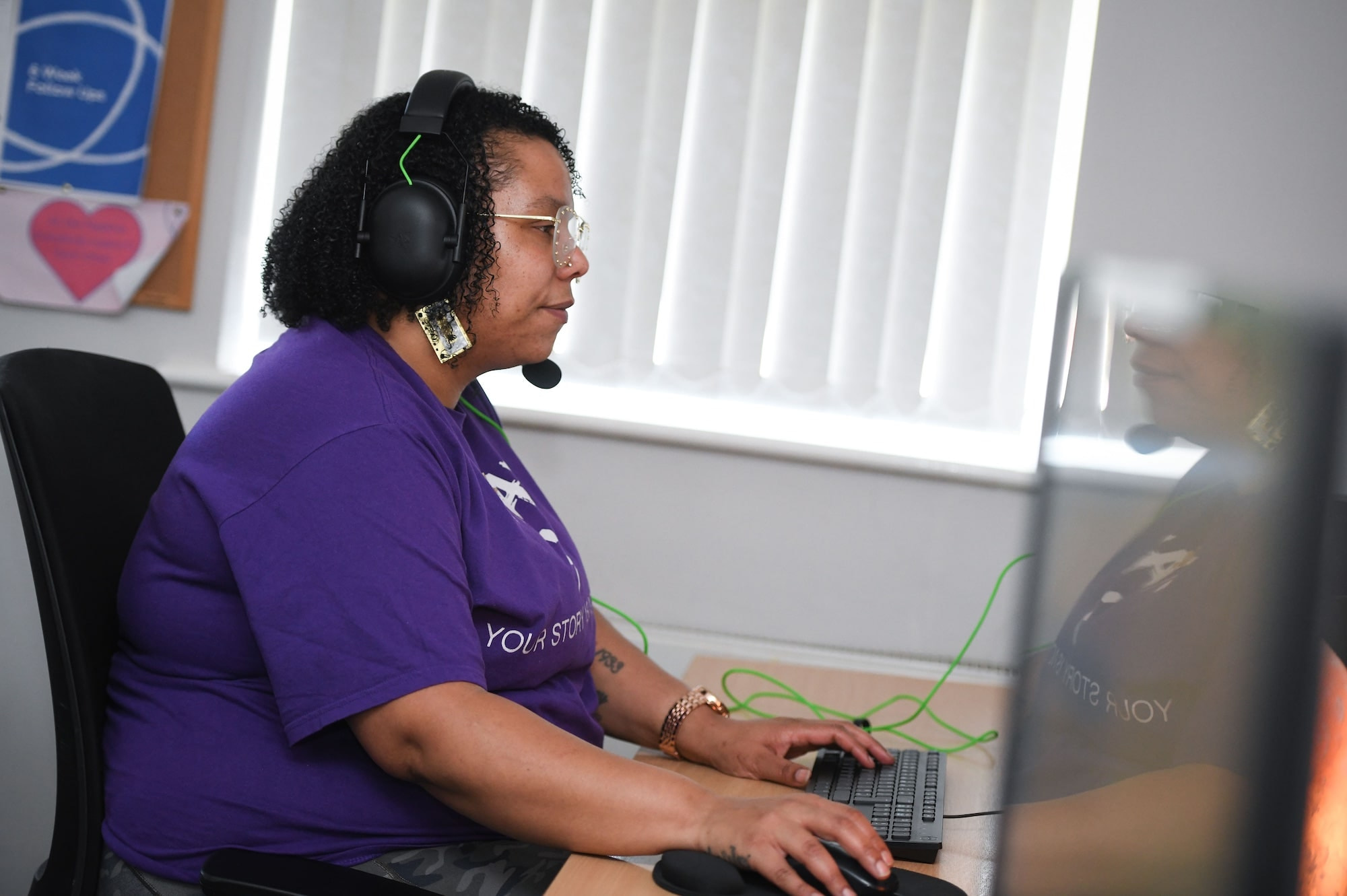
For me, the induction period was invaluable. I would recommend that all new frontline workers take their time to absorb everything during this phase, as it provides essential insights into the emotional needs of callers but also sets boundaries in protecting the wellbeing of call handlers too.
During my first few weeks, I learned that no-one can be an expert in every aspect of mental health. The vast scope of knowledge required for the role, whether it’s understanding different mental health conditions, regional signposting services, or providing advice. It’s through collaboration and reliance on my managers and colleagues that I learned the importance of trusting those around me and recognising that it’s okay not to have all the answers. I work as part of a very skilled team.

As a Helpline Worker, I encounter a broad range of calls. Our calls are incredibly diverse, from people experiencing severe loneliness (we can often be the only person they talk to that day) to callers close to experiencing a mental health crisis. My role is to provide a safe space for callers to share their experiences, fears, and frustrations.
Often we are catching people when they are beginning to fall
Many of our callers are well informed about their mental health triggers and will use our service to keep themselves safe and well during their difficult times.

Calls can range from brief 10 minute conversations to lengthy 2.5 hour discussions, this allows our callers to express themselves in a way that suits their immediate needs. This flexible approach ensures that every caller receives the support they need, whether they are calling out of frustration, anger, fear, or simply to be heard.
Birmingham & Solihull is incredibly diverse and the mental health needs of its population reflect this diversity. Offering an accessible service is vital, as language barriers can impact the effectiveness of support. At least 2 or 3 of my calls each week require translation support and we use the Language Line Service to do this. We engage daily with individuals from various cultural backgrounds and callers are typically aware of their need for a translator, and will ask for the translation service, there is an expectation that mental health services are able to provide this.
There are so many reasons why I love being a Helpline Worker, my role is not just confined to taking calls from members of the public, as a team we frequently engage with professionals, including CMHTs (Community Mental Health Teams), GPs, and even ambulance staff. This diverse range of callers reinforces the multi-faceted nature of the job; we often help professionals navigate the mental health challenges their clients are facing.
Working 5 shifts, across a 7 day week, often covering hours from 9am-5pm or 3pm-11am, this work is demanding but hugely fulfilling. I not only take Helpline calls, but also chat with people via Time on Line (our web chat service) and manage enquiry emails. These additional services ensure that Birmingham Mind can meet people’s needs in real-time, regardless of how they choose to seek help.

Mental health support work is inherently emotionally demanding, challenges faced by our callers, don't come well-formed in neat little packages and often the calls we receive are highly unpredictable. However, through support and training, I can stay calm and be compassionate, even when faced with time critical intense situations.“Challenges faced by our callers, don't come well-formed in neat little packages”Reflective practice is embedded in our weekly work.
Regular supervision sessions with my line manager provide an opportunity to reflect on difficult calls, seek advice, and discuss my emotional response to situations encountered.
My journey from lecturer to Helpline worker has proven to be a transformative experience. By actively listening to callers, trusting colleagues, embracing reflective practice, and maintaining a resilient mindset, I know we are making a difference and I am proud to be part of Birmingham Mind Helpline Team."
For emotional and wellbeing telephone support, call the Birmingham Mind Helpline between 9am and 11pm daily on 0121 262 3555.
Or visit https://birminghammind.org/what-we-do/helpline
Our Helpline welcomes applications from those looking to volunteer or those seeking paid work. Please visit https://birminghammind.org/ for more information.
Download section as PDFEngagement isn’t always easy. Many of the people I work with have been let down so many times that trust doesn’t come quickly. They’re understandably wary of new faces or systems.
My name is Stephen, and I work across Birmingham and Solihull as a Community Development Worker, specialising in mental health support for individuals in or leaving the criminal justice system.
I support individuals in prison and those recently released, as they navigate their mental health and wellbeing during resettlement. Many face long-standing mental health challenges, often combined with trauma, substance misuse, social exclusion, or undiagnosed neurodivergent conditions such as ADHD or autism. Traditional services haven’t always worked for them and part of my role is understanding why and finding new ways to support them.
Engagement is a slow process. It begins with trust. Through one-to-one conversations, creative workshops, gym sessions, and group wellbeing activities, I offer safe, non-judgmental spaces where people can explore their mental health often for the first time.
Many of the individuals I meet have never been asked how they feel. For some, even identifying emotions is unfamiliar. But with time, creative approaches, and patient support, we can help them begin to understand themselves.
Working closely with HMO’s (Homes of Multiple Occupation) and supported housing providers such as Green Square Accord and other probation-approved accommodations, I continue supporting people after release offering practical and emotional support as they navigate life outside of prison.
Tackling Health Inequalities Through Insight and Inclusion
A major focus of my role is amplifying the voices of those with lived experience. The insights I gather directly inform mental health service commissioners, helping to shape more inclusive, flexible, and effective services across the region.
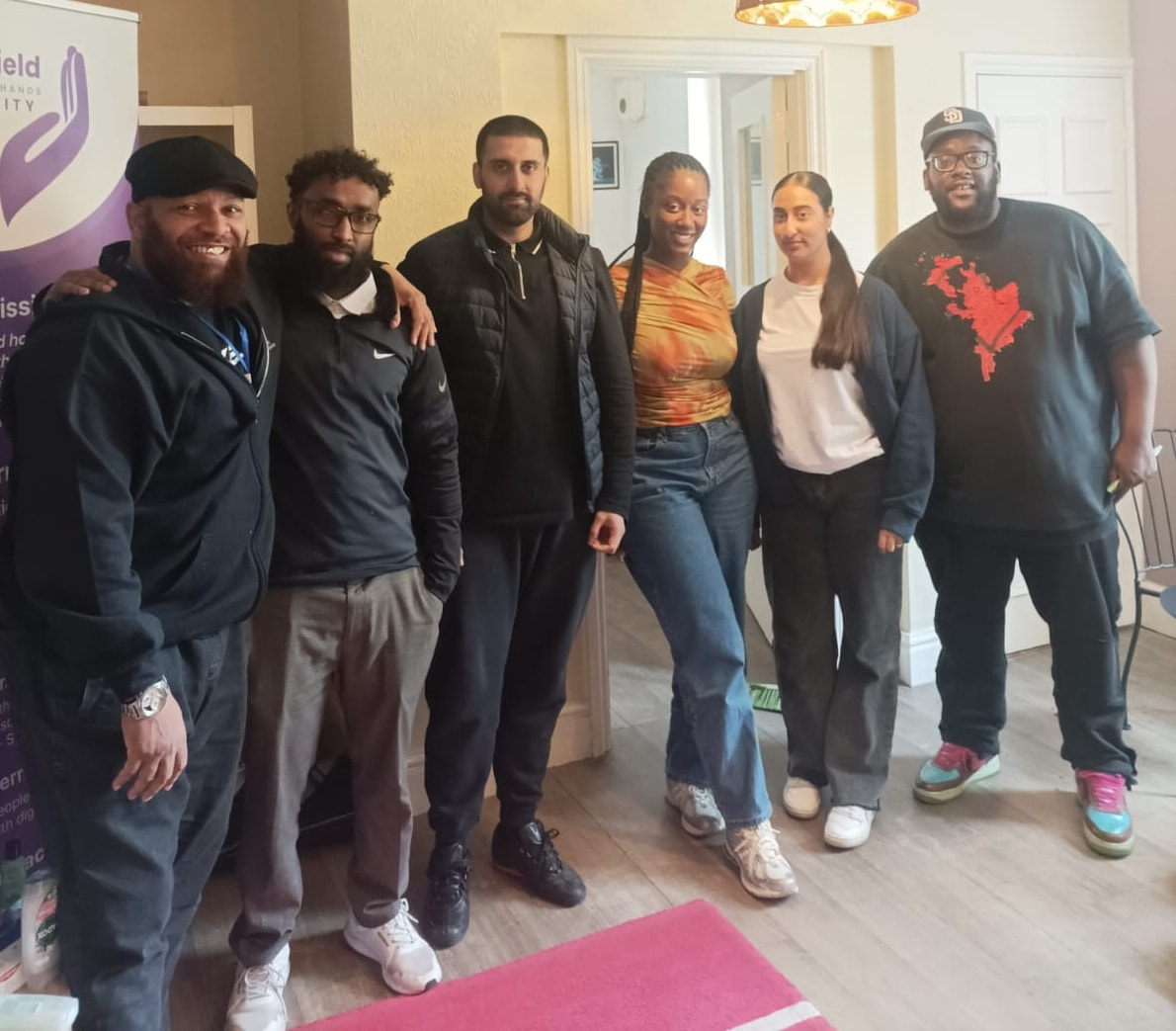
Seeing the Person, Not the Label
It’s hard to shine a light on this community. Once someone is labelled an ‘offender,’ society often stops seeing the person behind it. Their struggles become invisible and so does their potential.
This work is challenging, but it’s also deeply rewarding. When someone feels seen, heard, and valued often for the first time it’s hugely impactful. When we help people move forward with confidence and support, it doesn’t just benefit them, it strengthens families, stabilises communities, and reduces reoffending.
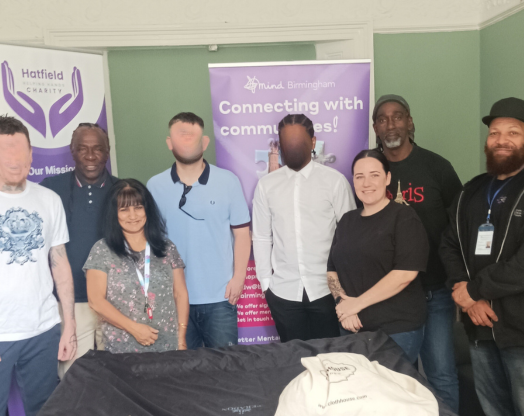
Why It Matters
Without consistent, compassionate support, prison leavers are at high risk of returning to crisis and crime. But when services recognise the whole person beyond their past we open the door to healing, growth, and long-term change.
Stephen has worked as Community Development Worker (CDW) with Birmingham Mind for over 15 years. The CDW Team, made up of a service manager and 7 workers, work with communities across Birmingham to promote discussion around mental health and wellbeing through various training, workshops and activity sessions.
Focusing on working with all communities groups and leaders; they work to increase knowledge of mental health and wellbeing, encourage greater self-awareness and self-management as well as to increase community engagement and cohesion citywide. Working across seven underrepresented communities, one of which include our Criminal Justice strand, you can read more about the work of the team here
https://birminghammind.org/what-we-do/community-development-worker-service/
Download section as PDFHow Supported Accommodation Gave Me the Confidence to Move Forward
Birmingham Mind’s Vulnerable Adults Service has been providing supported accommodation for over 15 years, with properties either owned or managed by us. Offering 72 self-contained flats, our service is one of the most in-demand in the region. Unfortunately, demand far exceeds supply, but we remain privileged to support each individual who comes to stay with us.
Service users typically stay in our accommodation for periods ranging from 18 months to several years, and we are proud to be part of their journey toward greater independence. To better understand the impact of our service, we spoke with Darren, a current tenant in our supported housing, about how this service has positively affected his life.

Darren’s Journey: A Step Toward Independence
“I moved into my Birmingham Mind flat 4 years ago, after transitioning from residential care. Although it was difficult to move to a new part of the city, Birmingham Mind made the process as easy as possible. My flat was newly decorated, with brand new carpet, a fridge-freezer, cooker, and a bed. I had a small amount saved and was able to buy my own settee and a small table.
In supported accommodation, staff are on-site from 9am every day, providing consistent support. In the beginning, I had regular support sessions and chats with staff two to three times a week. Over time, as I adjusted to independent living, my need for support lessened, and now I am able to live more independently.

The accommodation itself offers both communal and private spaces. There is always someone to cook, eat, or chat with, while respecting each other's privacy. We also have regular meetings and events. Most recently, members of The Active Wellbeing Society visited, and we have also enjoyed learning about Buddhism and meditation practices together.
Every week, I volunteer at the on-site art group, working with fellow service users to create a variety of art projects, ranging from clay animals to Christmas decorations and pastel drawings. I also volunteer at a weekly art group at Creative Support in Yardley, and recently I joined a new art group at the Omnia Centre.

My flat now feels like home. I've decorated it, bought a new TV, and even set up a dedicated art area as well as space for my DJ decs. Birmingham Mind staff have been nothing but professional and supportive. The staff motivate me to make the most of my time here and give me a reason to get up every day.
After four years in supported accommodation, I feel ready to move into my own home, ideally closer to my family in Castle Vale. Birmingham Mind’s staff are supporting me in this transition, and I feel confident that I no longer need as much support as I once did. I also know that there are other people who are waiting for a supported accommodations place, and I want to make room for them.
The support I’ve received has been invaluable, and I’ve recommended this service to many of my friends. Moving into accommodation that was partially furnished and newly decorated exceeded my expectations. Having my own space, where I can come and go as I please, with the support of Birmingham Mind staff when needed, has allowed me to build the confidence to move on. Now, I feel truly ready to take the next step.”

Darren’s story is just one of many examples of how Birmingham Mind’s Supported Accommodation service helps individuals rebuild their lives. Through a combination of personal support, community engagement, and the opportunity for independence, service users are empowered to regain confidence, develop new skills, and make positive steps toward their future.
We are proud to continue offering this vital service and look forward to supporting more individuals like Darren in the years to come.
For more information about our Vulnerable Adults Supported Housing Service please visit: https://birminghammind.org/what-we-do/supported-accommodation/
Download section as PDFFebruary 2024 – November 2024

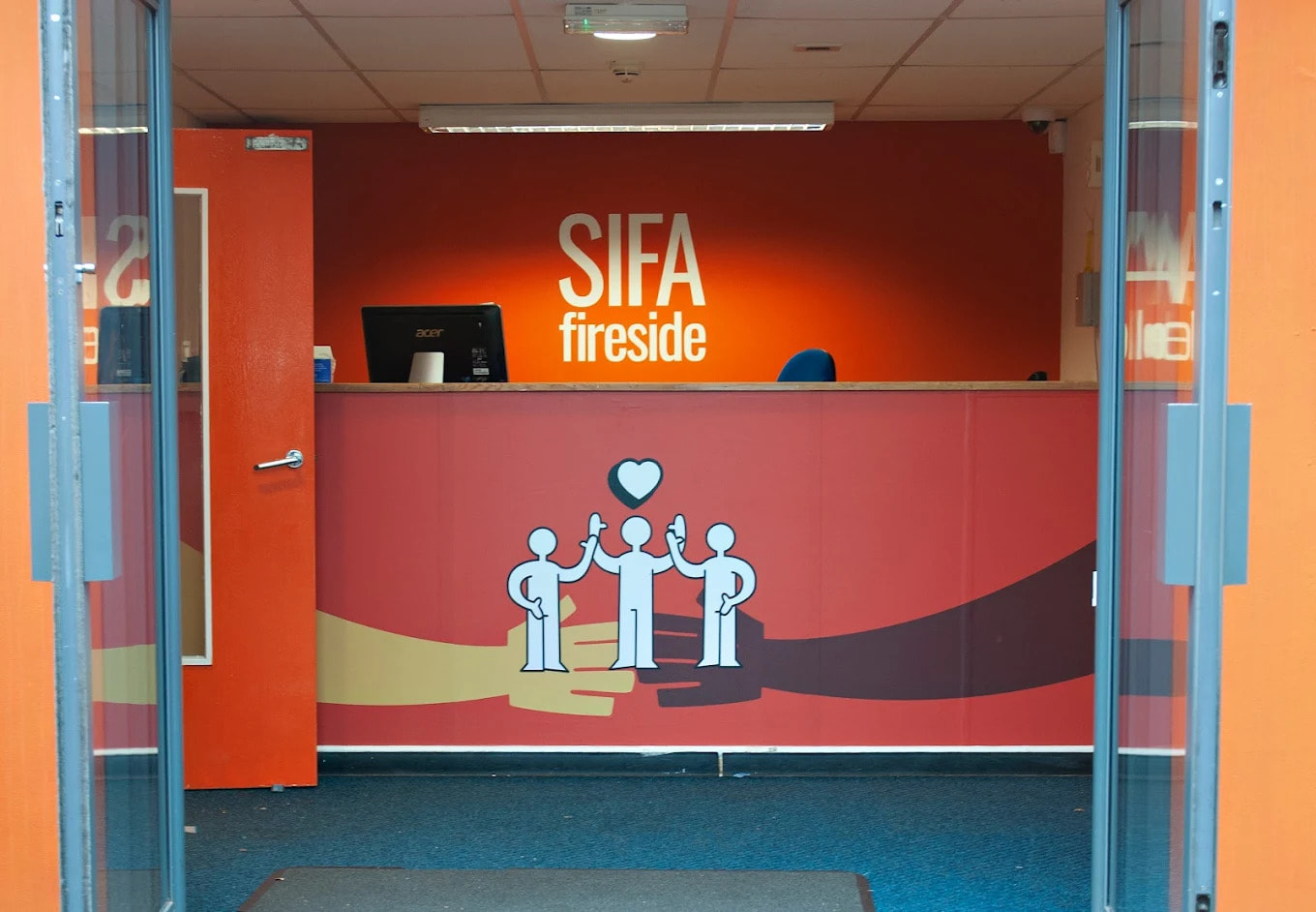
In late 2023, homeless charity SIFA Fireside approached Birmingham Mind to deliver a refreshed version of their existing Adult Support Hub service known as ASH.
Homelessness can trigger or worsen mental health problems. The experience of living without secure housing is traumatic. It can lead to acute anxiety, depression, substance misuse and feelings of isolation and hopelessness. The lack of safety, sleep, and stability creates chronic stress that directly impacts mental wellbeing with around 45% of people experiencing homelessness having a diagnosed mental health condition.
The Adult Support Hub (ASH) service aimed to place a stronger emphasis on health and wellbeing with support of Birmingham Mind, for individuals or childless couples living in unsecure or temporary accommodation.
The Adult Support Hubs across the city, focus on preventative, community-based support, promoting access to health services, for those who may have been excluded from these services previously.
Birmingham Mind officially began delivering the service on 5th February 2024. Our team of seconded staff received between 40 and 60 new referrals each month.
We seconded 3 full time staff members to the service and our dedicated Birmingham Mind team worked from both existing SIFA Fireside community hubs and in newly sourced community locations.
Supporting individuals, aged 25 or over, the service was designed to support those with physical or mental health difficulties, but specifically those at risk of exclusion from mainstream services. The team were also able to support people being discharged from hospital, providing both brief interventions and short-term wellbeing support (up to six weeks).

Thank you for getting me the help. I am not sure if I would have known where to start if I am being honest.
To expand our reach, to those most in need, we successfully identified and established new drop-in locations across the city, in Small Heath, Kitts Green, Tyseley and at three central Birmingham locations.
Thank you for the help with the guidance on my mental health
The needs of individuals varied and in some cases were moderately complex, our team provided a range of support from listening and emotional support to financial and budgeting advice. We we’re able to expertly provide support and guidance on a range of other topics, including:
- Housing and tenancy guidance
- Bereavement support
- Applying and accessing Food Bank vouchers
- Practical assistance in securing furniture and essential items
- Wellbeing advice
- Access to and referrals for specialist services
- In just over 10 months, we supported 315 adults at 8 community-based locations.
I feel hopeful for the first time in a long time.

Service User Support Journey
Claire* (*not her real name) is currently in a violent relationship with a partner and is unsure whether she would like to leave. Claire explained that she feels trapped, as she does not have a home of her own. She disclosed that she is pregnant and has decided to proceed with the pregnancy after taking some time to consider whether she wants to continue or terminate it. This pregnancy has been confirmed by a healthcare professional.
Claire would like to find her own accommodation but emphasised that she needs a place where she can bring her dog with her.
Our immediate priority was to ensure the safety of Claire and her unborn child. We signposted her to Birmingham Women’s Aid Drop-In and advised her to explore refuge options. We offered to help her look at available refuges if she would like, or she could attend Birmingham Women’s Aid Drop-In on her own.
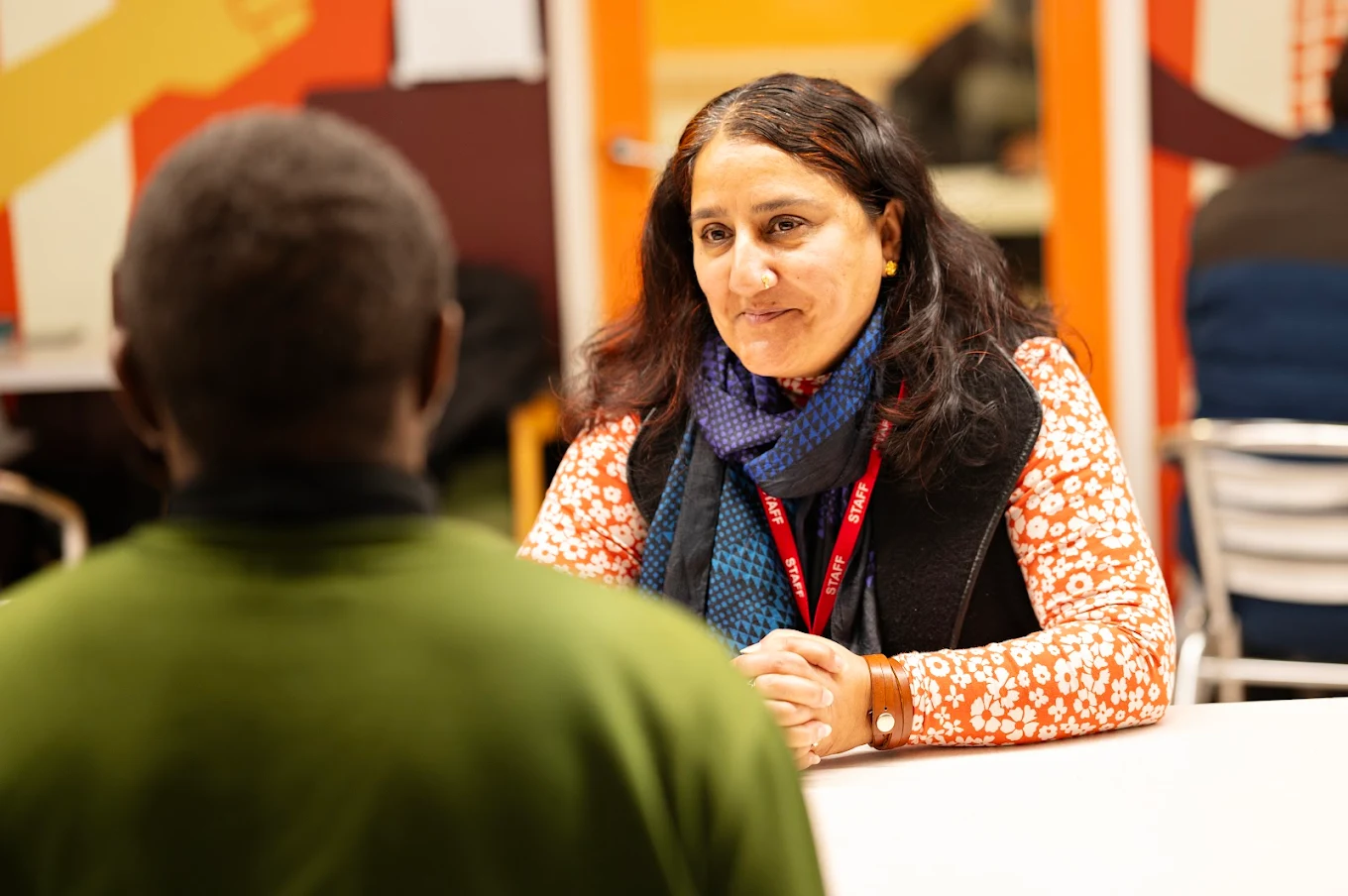
We also explained to Claire that, given her pregnancy, she could be at increased risk in her domestic situation. When we asked if her partner was aware of the pregnancy, she confirmed that he was.
The main barrier to Claire's decision-making is her indecisiveness about leaving the relationship. While she is aware of the risks, she may not be ready to take that step. From a professional standpoint, we assess her to be at risk, but we understand that readiness to leave an abusive relationship can be complex. Claire acknowledged the risks but mentioned that her partner is currently "behaving."
We signposted Claire to appropriate services and referred her for long-term support to help her obtain her own property and to provide assistance with leaving the abusive relationship.
Claire is currently engaging with Birmingham Children’s Trust and is awaiting assignment to a midwife. She is actively working with a representative from the trust to ensure the safety of herself and her unborn child, and we are pleased to report that she is engaging well with their services.
The police were required to attend Claire's property, and they completed a DASH (Domestic Abuse, Stalking and Honour-based Violence) checklist, which may have triggered a MARAC (Multi-Agency Risk Assessment Conference), though Claire is unsure. She mentioned that the police will be in contact with her for further steps.
Reflecting on Claires case, we know that people may not always be ready to leave a volatile and abusive relationship, even when they acknowledge the risks involved. It is important to provide ongoing support, validation, and information to those in Claire's situation, while ensuring that safeguarding measures are in place to protect both the individual and their children.

Due to restricted funding, the contract came to its expected end in November 2024. This unique partnership has embedded a stronger integration of mental health support into SIFA Fireside’s housing-focused model.
Additionally, we received positive feedback from established community partners, especially Central Foodbank, where Birmingham Mind continue to sustain an excellent relationship as part of our Vulnerable Adults Service (VAS)’s.
Discussions are now underway for future collaborations with SIFA Fireside and we are excited and hopeful to grow our strong, ongoing partnership.
Download section as PDFBirmingham Mind, strives to place lived mental health experience at the heart of what we do. One of the most impactful ways we’ve done this is through the employment of Peer Mentors. With the appointment of a dedicated Peer Mentor Manager, we’ve been able to expand this initiative, investing in more Peer Mentors across more of our services.
Ben's Story
We recently sat down with Ben, a music graduate, who joined Birmingham Mind as a Peer Mentor in June 2024.
For those unfamiliar with the term, Peer Mentor, Ben explains:
“A Peer Mentor has their own lived experience of mental health, and shares that experience with others to inform, provide hope, and walk alongside individuals in their recovery journey.”

After graduating from university in 2021, I faced a significant decline in my mental health.
“I was in a dark place, experiencing extreme feelings of anxiety, hopelessness and being lost. I hadn’t worked for a while, but after three years of navigating my own mental health, I felt ready to look for work again.”
I didn’t have a clear career direction but knew that I needed an employer where my mental health would be understood and supported. It was my mum who came across a social media post about the Peer Mentor role at Birmingham Mind. Though unsure of what the role might involve, I decided to attend an informal information session at the Bullring Wellbeing Hub.
After months of staying home, attending that session was a huge accomplishment for me. Meeting Danielle (Peer Mentor Manager) and learning more about the role, I felt it might be the perfect fit. Danielle offered both full-time and part-time positions. I applied for a part-time role, a stepping stone back into the world of work.

I had never put so much effort into any job application before.
I was invited to an interview. I tried not to get my hopes up, but when Danielle called to offer me the role, I was so grateful for the opportunity.
The onboarding and induction process were managed brilliantly. I was able to be open about both my historic and current mental health conditions. Danielle supported me every step of the way, particularly in learning how to set boundaries for myself and deciding how much of my own experience I was comfortable sharing with others.
I was placed within the newly established Intensive Community Rehabilitation Team (ICRT), supporting individuals as they transitioned from hospital back into the community. From day one, I was made to feel incredibly welcome and valued. My caseload built up quickly, and I found that I was often supporting service users who were less engaged socially, often younger males, who I felt able to connect with.
Peer Mentors work in harmony with Recovery Navigators, offering unique value by drawing from their own lived experiences as part of the care plan. We can see service users as frequently as two or three times a week. This frequency gives us the space to be active listeners and validate a person’s feelings through shared experiences, without the barrier of clinical formalities. Many of the people I support struggle with social isolation and disconnection.
People often hope to feel better before taking action, but sometimes, I try to reframe that, as it can be taking the action that helps them begin to feel better.
Over weeks and months, and sometimes even longer, I am able to build trusted relationships with the adults I support. A typical support session may begin with a board game and lead to a walk in the park, a kick about with a football or a trip to the local shops.
I can relate to the difficulty of not wanting to leave the house, that shared understanding helps build trust.
It’s most rewarding when you see the progression in the people you support, seeing people wanting to engage more, asking for help in securing employment, travelling on the bus for the first time by themselves or those looking to move away from shared accommodation to independent living.
Service users can express worries about medication or treatment. Speaking to someone who has firsthand experience, who has taken and continues to take medication, can break down the stigma and anxiety around mental health medication.
After six months, I felt ready to increase my working hours. By nine months I moved into a full-time Peer Mentor role.

Becoming a Peer Mentor with Birmingham Mind is the best decision I’ve ever made. All the pain I went through and now being able to use my experience to help others is incredibly rewarding and supports my own recovery too. I’ve come so far in the last 12 months. When I look back at those difficult years, it feels like a bad dream from a lifetime ago.
In June 2025, after 12 months as a Peer Mentor, Ben was successfully appointed as Deputy Service Manager for the ICRT.
Ben’s story is a powerful testament to the value of lived experience and the profound impact Peer Mentors can have, not only on the people we support, but on their own journey of growth and recovery. His path reflects the transformative potential of inclusive employment and the power of hope in action.
The Intensive Community Rehabilitation Service (ICRT) is delivered in partnership with the Birmingham & Solihull Mental Health Foundation Trust. Our team of Recovery Navigators work alongside Peer Mentors to support individuals transitioning out of hospital, providing support at home and in their local community.
Download section as PDFWe’ve heard from our six amazing story tellers and the difference Birmingham Mind has made to their lives whether that’s receiving support from our Helpline, receiving support to safely leave hospital and specialised mental health support for those leaving prison, but what about the rest? Here’s the difference we made across Birmingham and Solihull last year.
Our Support
23,650
people accessed a service delivered by Birmingham Mind
We answered
17,024
phone calls between 9am – 11pm over 365 days!
4,756
people contacted us via our online web chat.
2028
people have dropped in to our new Bullring Wellbeing Hub.
99%
of people would recommend our Bullring Wellbeing Hub Service.
95%
of people rated the support they received at the Bullring Wellbeing Hub Service as excellent.
100%
of people asked would recommend our Crisis Intervention service Talking Space.
423
sessions & events delivered by our Community Development Worker Team, engaging with...
4,170
people over
2,180
hours.
Our Staff & Trustees
We recruited
74
new staff members last year, with a total of
210
people working for Birmingham Mind.
Our
10
Trustees donated
661
hours of their time.
Our Trustees celebrated a milestone year...
Congratulations to Mark Shakespeare on achieving
30
years service.
Ian McPherson who has been a board member for
10
years.
Andrew Wylde who marks
5
years’ service in October 2025.
Our Volunteers
We welcomed
66
Volunteers during the last year.
Who gave over
2,956
volunteering hours in total.
Peer Mentors
5 Peer Mentors (see story 6 to learn more about Peer Mentors) – working across 4 services gave
659
Peer Mentoring hours.
Peer Mentors supported
750
people in the last 12 months
Our Training Delegates
We delivered
89
training courses in the last 12 months, delivered by
9
different trainers
1,145
people attended a training course delivered by Birmingham Mind.
74
People trained in Mental Health First Aid as part of our partnership with the Aston Villa Foundation
Our three-year suicide prevention training contract, with Walsall Public Health saw over
220
attendees and was delivered in...
9
different venues and workplaces across the borough alongside online deliveries.
We have delivered workplace mental health training to
26
different companies or organisations in the last 12 months.
“Thank you again for the session you delivered for us at General Dental Council it was very well received with everyone in attendance providing positive feedback.”
Staff Training
179
staff received induction or refresher training within the last 12 months.
99%
of our staff have completed their online Adult Safeguarding and Children’s Safeguarding training this year.
We recruited and trained
10
new Workplace Mental Health First Aiders!
“Our staff spend so much of their time supporting others and so it is crucial that as an organisation we support our staff’s wellbeing and mental health. Having our own Workplace Mental Health First Aiders means staff have an additional support system to go to, which is easily accessible, promotes a sense of care, provides a safe space to talk and where staff can be guided to other sources of help...
I know from initial feedback, we are already having a positive impact – for example staff said talking to a WMHFAider made a positive difference to their wellbeing, and someone else felt it had prevented them from going off sick. I am passionate about supporting our WMHFAider Team because they are a vital part of fostering a supportive working environment for our staff.”
Roz Ratcliffe, Workforce Development Manager
We recieved
35
complaints in the last 12 months...
43%
were either upheld or partially upheld.
8 complaints were withdrawn.
We recieved
266
compliments from our service users, their family and professionals, including
144
for our Helpline.
But ultimately, we do all of this to provide the care and support to the adults who need our services, giving them the opportunity to have the best possible chance of fulfilling their lives, being in control of their mental health, managing their recovery journey and prioritising their wellbeing.
98%
of our service users rated our communication as either excellent or good.
95%
said we had contributed to their recovery journey.
70%
rated us as Five Star when asked about Feeling Safe in our service.
39%
of respondents advised us they have accessibility and learning requirements.
78%
felt that they were involved with Birmingham Mind.

How You Gave Your Support
£164,172.48 raised through our corporate partnerships, individuals giving cash or regular donations and local fundraising initiatives.

How did you spend my donation?
The amazing donations we received go towards the people we support in lots of ways. This includes our Wellbeing Hub at the Bullring in the heart of the city which saw 2,028 people visit to get support and advice from our teams on their mental health. Fundraised income also supports us to recruit, train and support our volunteers who bring so much to the quality of the services we offer.
We couldn't do what we do without your fantastic support, so thank you to every single person who donated to Birmingham Mind.
The Trustees confirm that the financial information presented below is extracted from the full financial statements. Copies of the full financial statements, which were approved by the Charity’s Trustees on 7th August 2025, are available on our website.
Summary of accounts 2024/2025
| 2025 (£) | 2024 (£) | |
| Total Income | 10,170,340 | 10,297,407 |
| Total Expenditure | 10,170,304 | 10,308,913 |
| Net Income | 36 | 11,506 |
| Recognised Gains/(Losses) | 121,500 | 228,392 |
| Net Movement in Funds | 121,536 | 239,898 |
| Total Funds brought forward | 3,163,773 | 3,403,671 |
| Total Funds carried forward | 3,285,309 | 3,163,773 |
Birmingham Mind has 21 locations (made up of offices, accommodation sites and community spaces) across Birmingham, with our Head Office based in the Jewellery Quarter. For enquiries to our Head Office please call 0121 608 8001.
At Birmingham Mind, our commitment to race equity is not just a statement— it is our intention to change. Over the past year, the Race Equity Group has grown into a powerful force for change, driven by data, compassion, honesty and a shared vision for a more equitable and inclusive organisation.
The Race Equity group has embedded race equity into the heart of our strategic planning. From Board-level support to frontline action, we’ve taken new steps to ensure our workforce and services are reflect the communities we serve. Our business plans now include clear diversity targets, and our recruitment practices are evolving to be more inclusive and representative.
We’ve made significant progress in understanding our baseline demographics, identifying areas where representation is lacking—particularly among people of Asian heritage in leadership roles—and taking action. Initiatives such as creating Development roles, re-designing our training offer, extra training for managers, targeted recruitment for Mental Health First Aiders/Freedom to Speak Up Champions, and ensuring we support staff at times of national/local culturally critical crisis situations, have all flowed from this Group.
But our success isn’t just in the numbers/initiatives. It’s in the stories we share, the conversations we open, and the culture we’re building. We’ve embraced honest dialogue, acknowledged where we’ve fallen short, and committed to doing better. We have heard that sometimes even when we think we have done things well, how people have experienced it has not been what we wanted to happen. Our Race Equity Group has become a space for reflection, accountability, and inspiration.
As we look ahead, we remain focused on ensuring race equity is a golden thread running through everything we do—from service delivery to staff development.
Because of being on this Group, I finally felt able to share my concerns with my manager about the need to improve how I am supported.
Reflections from our CEO!
Helen Wadley
It is my privilege to present this year’s Annual Report, reflecting on a period of both challenge and achievement for Birmingham Mind. This year has been one of significant growth and innovation for Birmingham Mind.
A particular highlight has been the launch of three new services; including our new Talking Spaces service for under 25s. Talking Spaces has already made a real difference across the city, providing a safe and welcoming environment for people to access support when they need it most, and it is great that we have been able to increase our offer. We have also continued to expand our partnership work with the mental health trust, strengthening our ability to deliver joined-up care and support across Birmingham. These collaborations have enabled us to reach more people, respond more flexibly to need, and ensure that our services are accessible to all.
The stories shared by those who have used our services, and the gratitude expressed by their families, are a powerful reminder of why this work matters. Yet, as demand for our services continues to grow, funding is becoming ever more challenging. While the creativity and resilience of the charitable sector are legendary, there are limits to how far we can stretch our resources.
But despite these challenges, our dedicated staff, volunteers, and partners focus on each person as an individual. Their commitment and compassion are at the heart of our success. As we look ahead, we remain focused on innovation, partnership, and delivering the highest quality support to everyone who needs us.
Thank you for your continued support.
Download section as PDF
Birmingham Mind would like to thank the following for their continued financial contributions:
- Birmingham & Solihull Mental Health Foundation Trust
- Birmingham & Solihull Mental Health Provider Collaborative
- Birmingham City Council
- Forward Thinking Birmingham
- NHS England
- Walsall Council
Housing Partners
- Adullam Homes Housing Association
- Bromford Housing
- Citizen Housing
- Amplius
- Midland Heart Housing Association
- Nehemiah Housing Association
- R & J Support & Care Services Limited